From Design to Delivery: The Power of the Packaged Plant Room
Reliable and efficient mechanical and electrical services are essential for contemporary building design and infrastructure. The packaged plant room is one of the most efficient and streamlined solutions currently available. These self-contained units are transforming the installation and maintenance of heating, cooling, ventilation, and water systems in a diverse array of sectors, including healthcare, education, and commercial and industrial contexts.
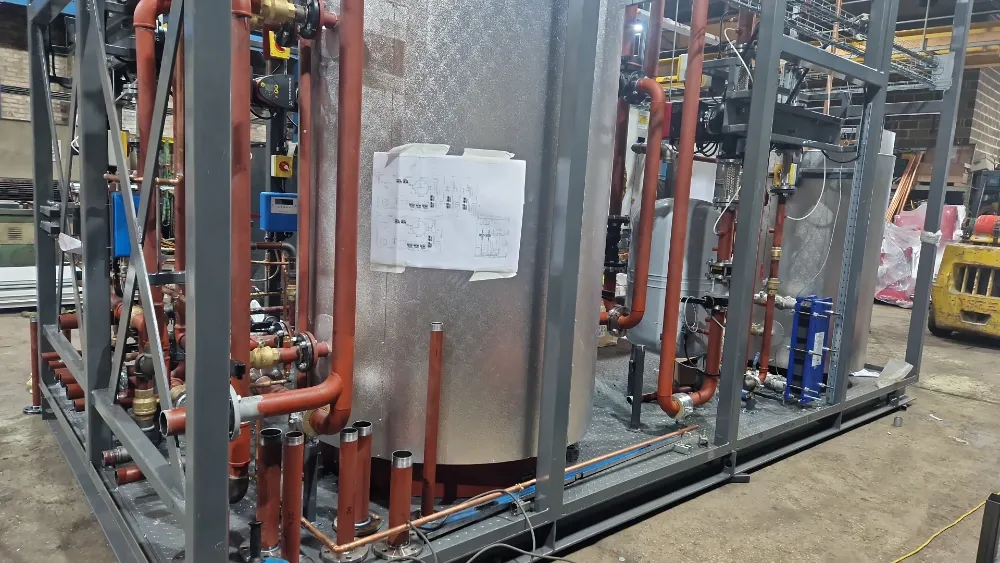
A packaged plant room is a prefabricated, fully equipped structure that is delivered to the site and is immediately available for integration. It houses essential services. A packaged plant room is assembled and tested in a controlled environment before being transported to its ultimate location, as opposed to traditional site-built plant rooms that necessitate lengthy and intricate on-site construction. This method provides a variety of advantages, including enhanced safety, quality assurance, and flexibility, as well as substantial time and cost reductions.
The reduction in construction timelines is one of the primary benefits of utilising a packaged plant room. Weather, access restrictions, and coordination issues among various professions can all disrupt the on-site construction of mechanical and electrical services. In contrast, a packaged plant room is constructed in a manufacturing facility, which results in increased efficiency and consistency. It is delivered and integrated to the existing systems with minimal disruption once it is finished. This modular approach not only expedites installation but also allows developers to more consistently meet strict deadlines.
The enhancement of quality control is an additional compelling reason to seriously consider a packaged plant room. Before departing the facility, factory-built systems undergo rigorous testing and adhere to standardised manufacturing processes. This implies that each packaged plant room is delivered fully operational, with all pipework, controls, and equipment having been verified to function as intended. The outcome is a substantially reduced likelihood of defects or commissioning issues in comparison to conventional construction methods.
A packaged plant room can be customised to maximise the available space for projects where space is at a premium. These units can be configured to accommodate challenging footprints while still satisfying performance requirements, regardless of whether they are installed on a rooftop, at ground level, or in a cellar. Additionally, the compact design of a packaged plant room allows for the preservation of internal space within a building for more valuable purposes, such as additional accommodation, workspace, or retail floor area.
A packaged plant room is appropriate for a diverse range of applications due to its adaptability. Mechanical and electrical services are required by hospitals, colleges, shopping centres, and industrial sites, although their requirements may vary. These specific requirements can be accommodated by a packaged plant room, which may include advanced heating systems, chilled water provision, enhanced cold water, or energy centres that incorporate CHP (combined heat and power) technologies. The modular construction process enables a high degree of personalisation without sacrificing quality or performance, irrespective of the complexity.
The design of a packaged plant room further improves operational efficiency and maintenance. Service teams can conduct routine inspections and repairs with greater ease due to the logical arrangement and easy accessibility of all major components. The supporting documentation, control displays, and schematics are typically well-organised and standardised, as the systems are pre-engineered and integrated prior to delivery. This not only enhances the safety and reliability of the plant room over its tenure, but also simplifies maintenance.
The environmental efficacy of a packaged plant room is another significant advantage. Renewable energy sources, high-efficiency turbines, intelligent control systems, and advanced insulation can be integrated into the design of these systems to prioritise energy efficiency. The outcome is a plant room that not only adheres to building regulations but also supports long-term sustainability objectives. A packaged plant room can be a valuable component of the process of attaining the environmental certifications that many contemporary developments now seek, such as BREEAM or similar certifications.
Additionally, security and durability are essential considerations. A weatherproof and robust structure is typically used to house a packaged plant room, which is intended to defend against vandalism or accidental damage and withstand the elements. Units may be constructed with secure enclosures, fire-rated panels, and access controls to guarantee that only authorised personnel may access and operate the equipment. This renders them optimal for critical infrastructure initiatives or remote locations.
A packaged plant room’s scalability is an additional noteworthy benefit. The service requirements of a business or facility may expand in tandem with its expansion. Modular units facilitate future expansion by incorporating additional units or upgrading existing components within the structure. This is especially advantageous for phased developments, as future requirements may be uncertain during the initial construction phase. Planners are able to adjust without the need for extensive reconstruction due to the adaptability of a packaged plant room.
The modular character of a packaged plant room also facilitates the optimisation of transport and logistics. These units are frequently delivered in a single piece or in sections for final assembly on-site, as they are designed for effortless transportation and delivery. This method minimises the disruption to the neighbouring areas by reducing the number of deliveries and the amount of on-site labour that is necessary. This is particularly advantageous in urban settings or live sites where conventional construction may be impractical.
A packaged plant room provides substantial cost savings from a financial standpoint. The construction process is expedited, which reduces labour costs. Additionally, the precision of prefabrication minimises waste and revisions. Long-term savings are additionally facilitated by operational efficiencies, reduced maintenance expenses, and enhanced energy efficiency. A packaged plant room can be a financially prudent choice for developers and facility managers who are seeking to optimise their return on investment.
The factory-built features of a packaged plant room facilitate improved adherence to health and safety standards in terms of compliance and safety. Quality assurance procedures are simpler to enforce in a controlled environment, and workers are not subjected to the same hazards as those found on construction sites. The reduced on-site work results in fewer hazards for other professions and site personnel when the product is delivered to the site. This leads to a more secure project execution.
In summary, the packaged plant room is a substantial improvement in the delivery and maintenance of building services. These spaces provide unparalleled adaptability, reliability, and efficiency by integrating mechanical and electrical systems into a prefabricated unit. Their value is demonstrated by their widespread applicability across various sectors, and the customisability of each packaged plant room guarantees that specific project requirements are met without compromise. The packaged plant room is expected to become an even more essential component of the constructed environment as the construction industry continues to pursue solutions that improve quality, sustainability, and speed.